
Heart of Rattlesden Ramble
Explore the hidden gems and historical landmarks along our picturesque village routes. Here we explore the Heart of Rattlesden Ramble.
Distance 1.9 miles
Duration 45 minutes approximately
Uncover Hidden Treasures
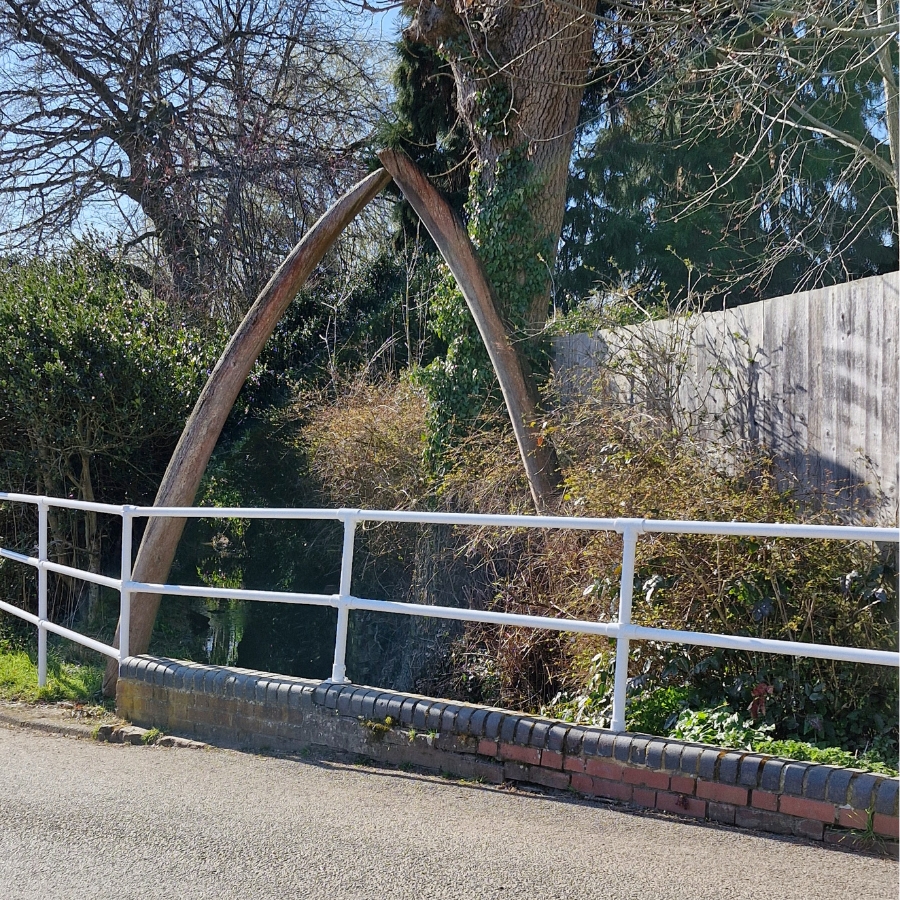
Direction: Start from the Brewers cross Lower Road and walk west along the white railings.
Capture the Beauty of Rattlesden
Historic landmarks and beauty


The Brewers pub
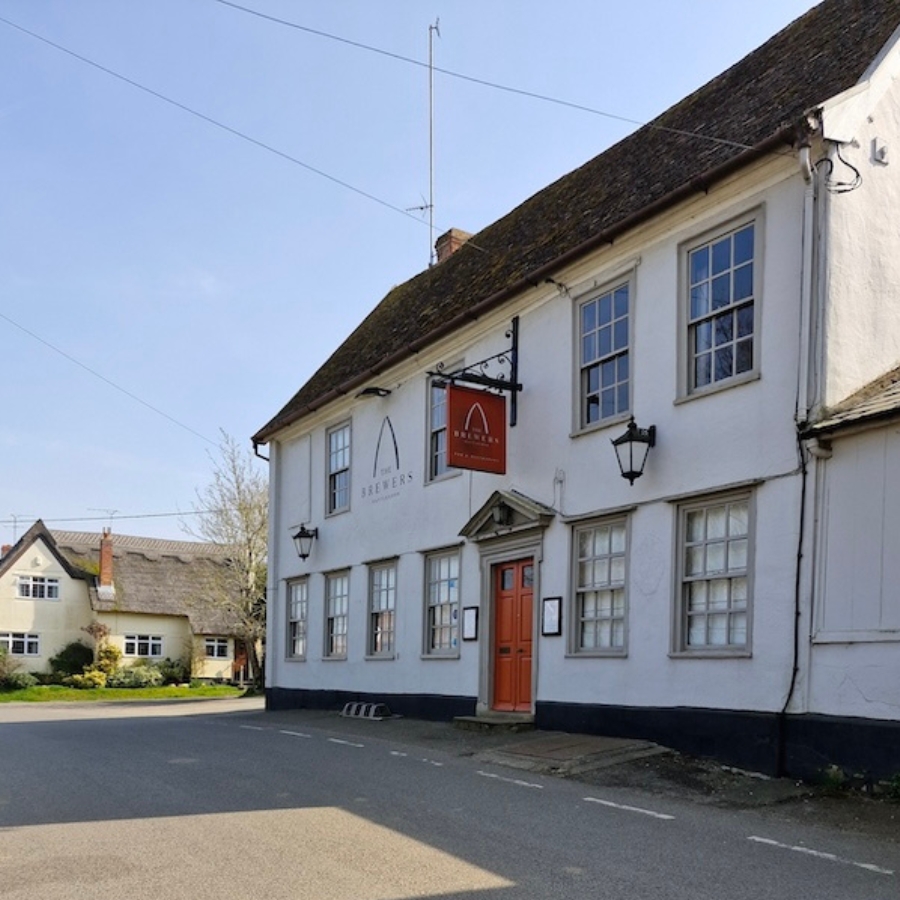
The Brewer’s is a Grade II listed building, with some of the internal structure dating from the 15th/16th Century, while the frontage dates from the 18th Century.
It became a fully licensed pub in 1914 when the Half Moon Inn burnt down. It has functioned as a shop and bakery, as well as a beer house over the years, and the main bar features the old baker’s oven, which is about 12 feet deep.
The Gowers/Dykes family ran the pub for nearly 68 years until a major refurbishment and change of landlord in 1977.
Interestingly, Mabel Dykes (Gowers), a former landlady, maintained there was at one time a gaol house in the grounds and that the Brewers Arms cellar with its very heavy and well bolted door was the cell for offenders.
In the early 1930s (and probably earlier), 2 quoit clay beds at Brewers Arms became very popular. Interestingly the ‘well off’ teams had quoits, others used horseshoes!
The current Brewers pub is recognised as an award-winning food and drink venue.
Institute House, Village Hall and Community Shop
Institute House is on your left across the road walking along on Lower Road.
Institute House was the maltsters house originally, connected to the maltings next door, which is now the Village Hall.
For many years Institute House was occupied by Basil Flack (a local thatcher) and Mrs Cissie Flack. They were hall caretakers and no doubt for convenience in that role there was a door and passage from Institute House into the Village Hall.
Rattlesden Village Hall (is on your left, walking along Lower Road)
Originally a Maltings, the building was gifted in 1902 for use as a Reading Room, a quiet area to read used in Victorian and Edwardian times to improve literacy and provide an alternative to the pub. After WW1, they became less fashionable and many, like ours, became the church or village hall.
The village hall has hosted many community events and clubs over the years, with badminton played here since the 1950s. The hall has now been established and re-purposed as a Pre-School.
Rattlesden Community shop and Post Office (is viewable on your left (St Nicholas Close) as you walk along Lower Road)
The shop opened in March 1996 and joined the Post Office in the underused lounge of the St Nicholas Sheltered Housing Scheme, which had been built in the 1960s. This successful volunteer-led community shop is always worth a visit for pre- or post-walk refreshments.

The River Rat
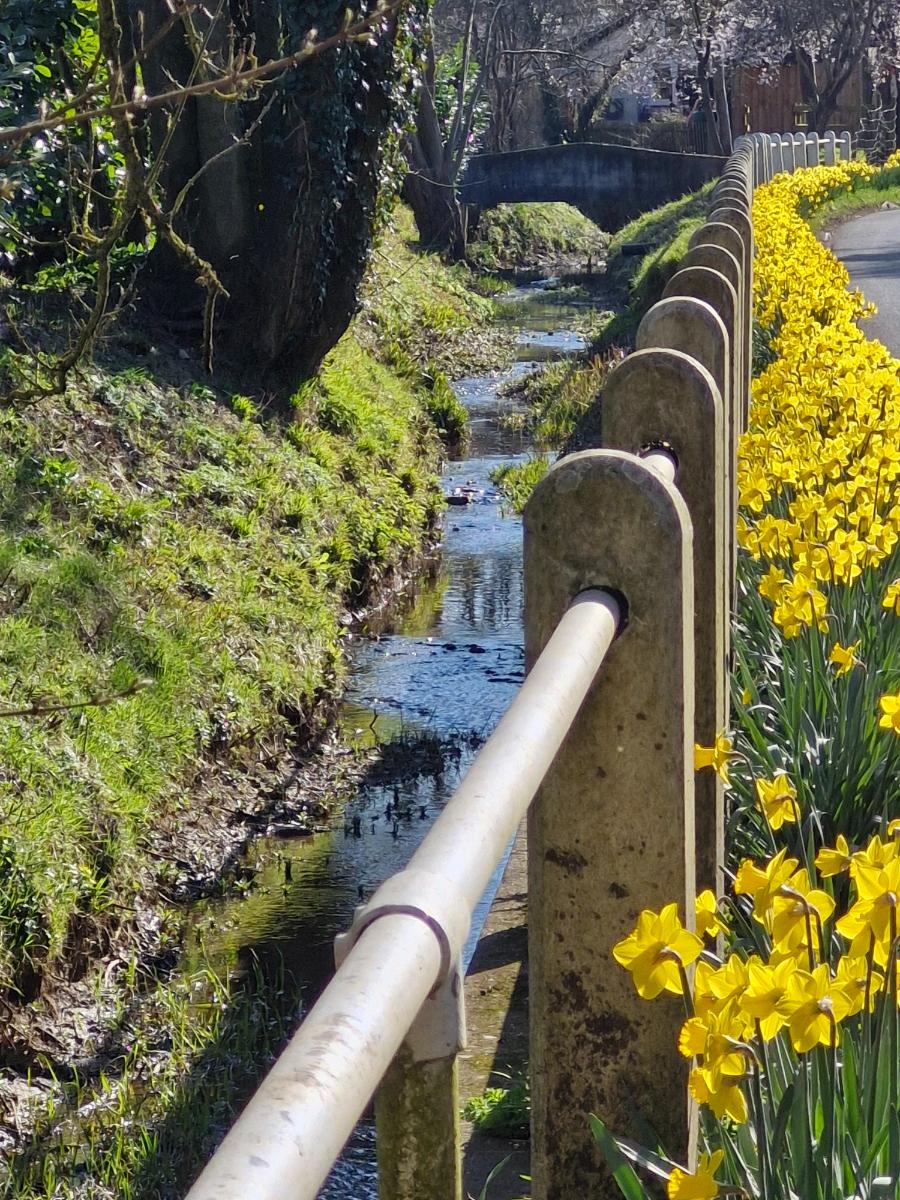
The River Rat: You are walking alongside the river, guided by the white railings of Lower Road.
Although the river is more an insignificant stream for most of the year, it is considered to have been broader and navigable historically. Despite the narrow current cut of the river through the village this was not always the case. A number of historical references point to Rattlesden as the historic port of Bury St Edmunds with records of sizeable barges navigating up the River Orwell to Rattlesden.
In the 14th century, poet and monk John Lydgate wrote about Caen stone being transported from Normandy up the ‘River Orewell’ to Rattlesden where it was taken to Bury St Edmunds for the rebuilding of the Abbey in 11th century.
In the 17th century, there is a reference to an Inquiry in 1340 about the ownership of the port of Erewell (Orwell) or Ipswich, and it claimed the name of Erewell referred to a spring in Rattlesden which flowed to Ipswich. There is some conjecture therefore that the River Rat should be the Rattlesden Orwell with records back in 1200 that the River Orwell rises in the parish of Rattlesden (Haughley Meadow).
The river remains prone to occasional flash flooding.
The Whalebones
Rattlesden Baptist Chapel (Viewable from the Whalebones and School Road junction – the Baptist Church also features on the Half Moon and Rising Sun Trail)
Originally built in 1808 and enlarged in 1815, it was extensively rebuilt in 1892. Opposite is The Old Manse which historically housed some of past Baptist Ministers. The Manse in School Lane is now their residence.
Directions – you are walking to the right at the junction towards School Road.
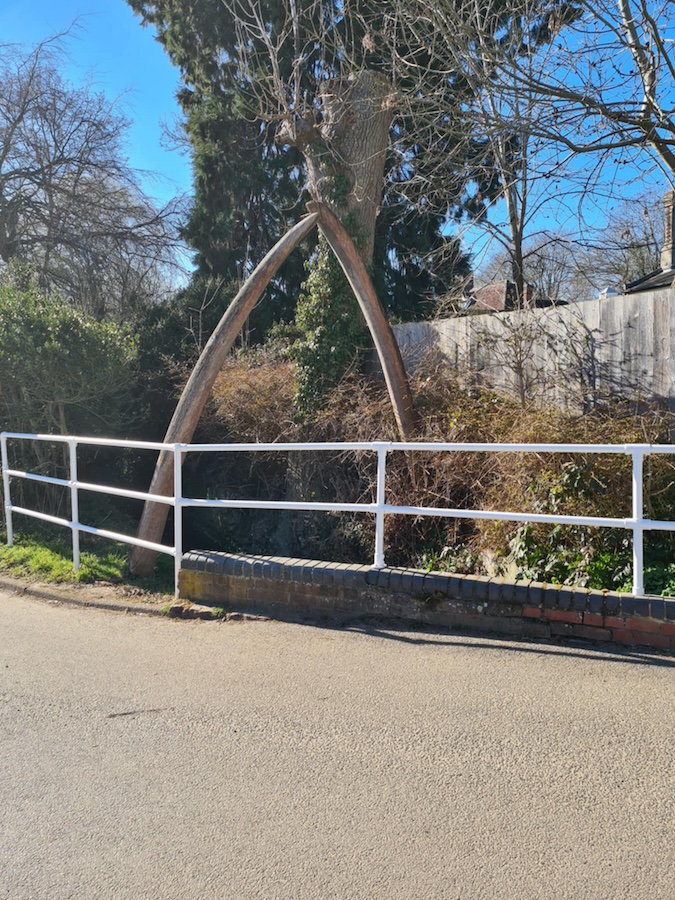
The ‘Whalebones’ (viewed from the junction of Lower Road/School Road).
Whalebone arches became popular in late 18th- and early 19th-century coastal areas as a link to the whaling industry, but in other areas for ornamental purposes.
It is not known when the Rattlesden whalebones were erected, or by whom, but they are an important symbol of the village. Locals often recall using the movement of the whalebones to predict the weather.
The originals were replaced in 2000 by the current wooden replicas, carved by a local craftsman.
Whalebone Cottage (Viewed from the junction of Lower Road/School Road).
George Smith, a prominent local builder of the time, built this property before he died in 1876.
In the 1881 census, it was first listed as Whalebone Cottage.
The house was once occupied by the organist of St Paul’s Cathedral, Mr Foss, who lived there after WW2 and gave some locals piano lessons.
School Road
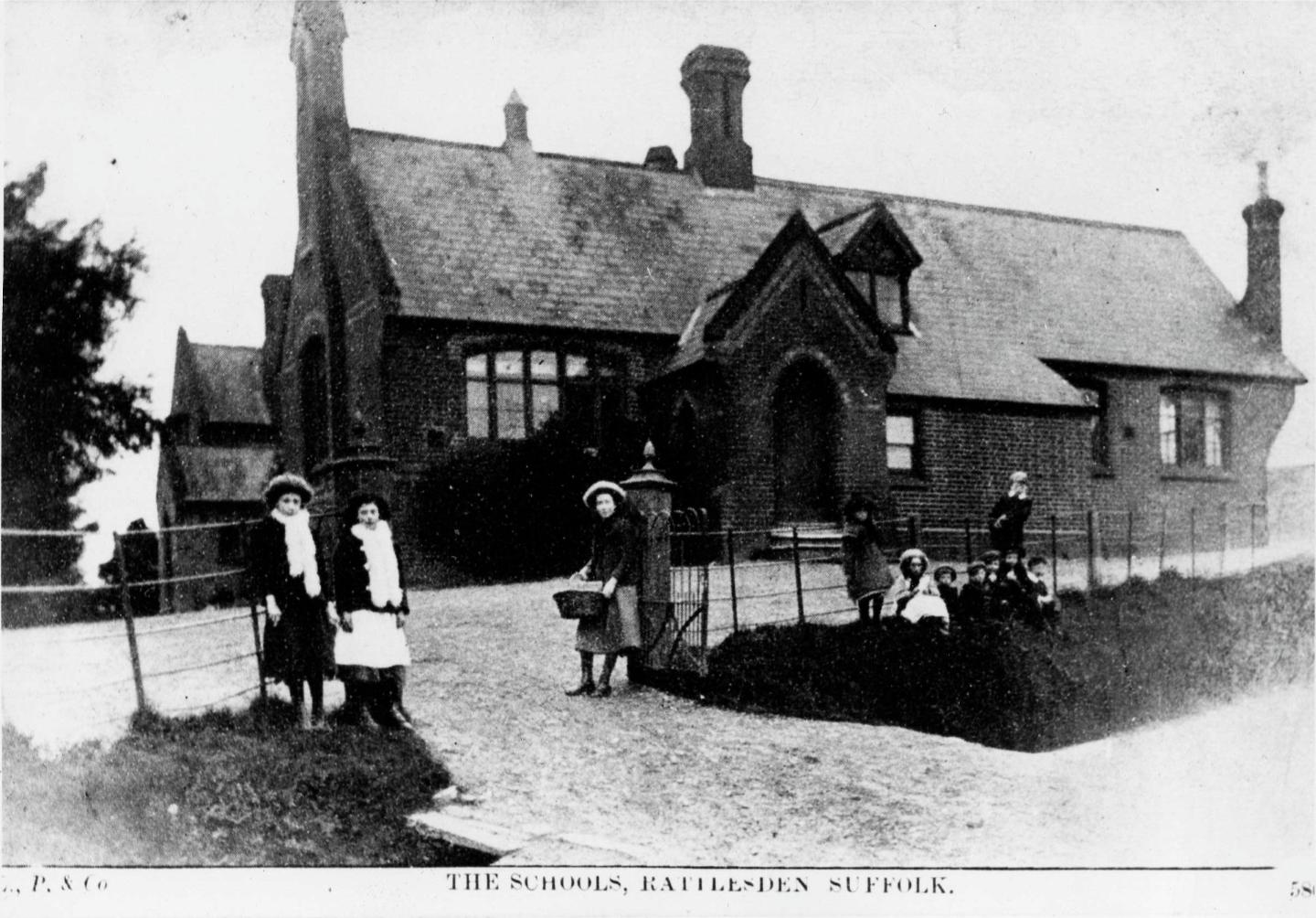
School Road (Hill) – the Roman road (Walking up School Road)
The old Roman Road runs through Rattlesden and forms part of the Norwich -Ixworth – Colchester route. Up the school hill, there are remains of hedging that date back 1000 years and mark the true width of the original Roman Road. Smugglers were known to hump goods on packhorses up to Peggs Farm on this route.
Rattlesden Primary School (viewable on your left walking up School Road)
Following the Education Act 1870, the original national school was built in 1872, relocating from The Old Workhouse next to the Five Bells. It was intended to cater for up to 200 pupils and the average attendance between 1891-8 was 146. In recent year it has been averaging 120 pupils, which include children from surrounding parishes. A large modern extension was completed in 2004.
Old Mill House (School Road) (on your right walking up School Road)
In the grounds of this property was one of three mills in Rattlesden. No longer standing, only the grindstones remain although they are not accessible to the public from the footpath. (old photos of mill)
Directions; At the top of School Road you follow the footpaths on the map and the Peggs Farm loop returning to the top of School Road. On your return down the hill you will walk to your left into High Street.
Uncover Hidden Treasures
Directions: At the top of School Road you follow the footpaths on the map and the Peggs Farm loop returning to the top of School Road. On your return down the hill you will walk to your left into High Street.
High Street

High Street
Walk along High Street and view a variety of historic buildings. On your right, you can view The Old Queen Victoria (Victoria/Queen Victoria beer house and Post Office).
The Victoria dates back as a beer house in the 19th century. It had closed by 1919 when its license was declared redundant. It later became the Post Office (after moving from The Rookery opposite) until 1995 when it relocated to the Community Centre on St Nicholas Close.
You will walk on towards the Five Bells on the right-hand side of High Street.
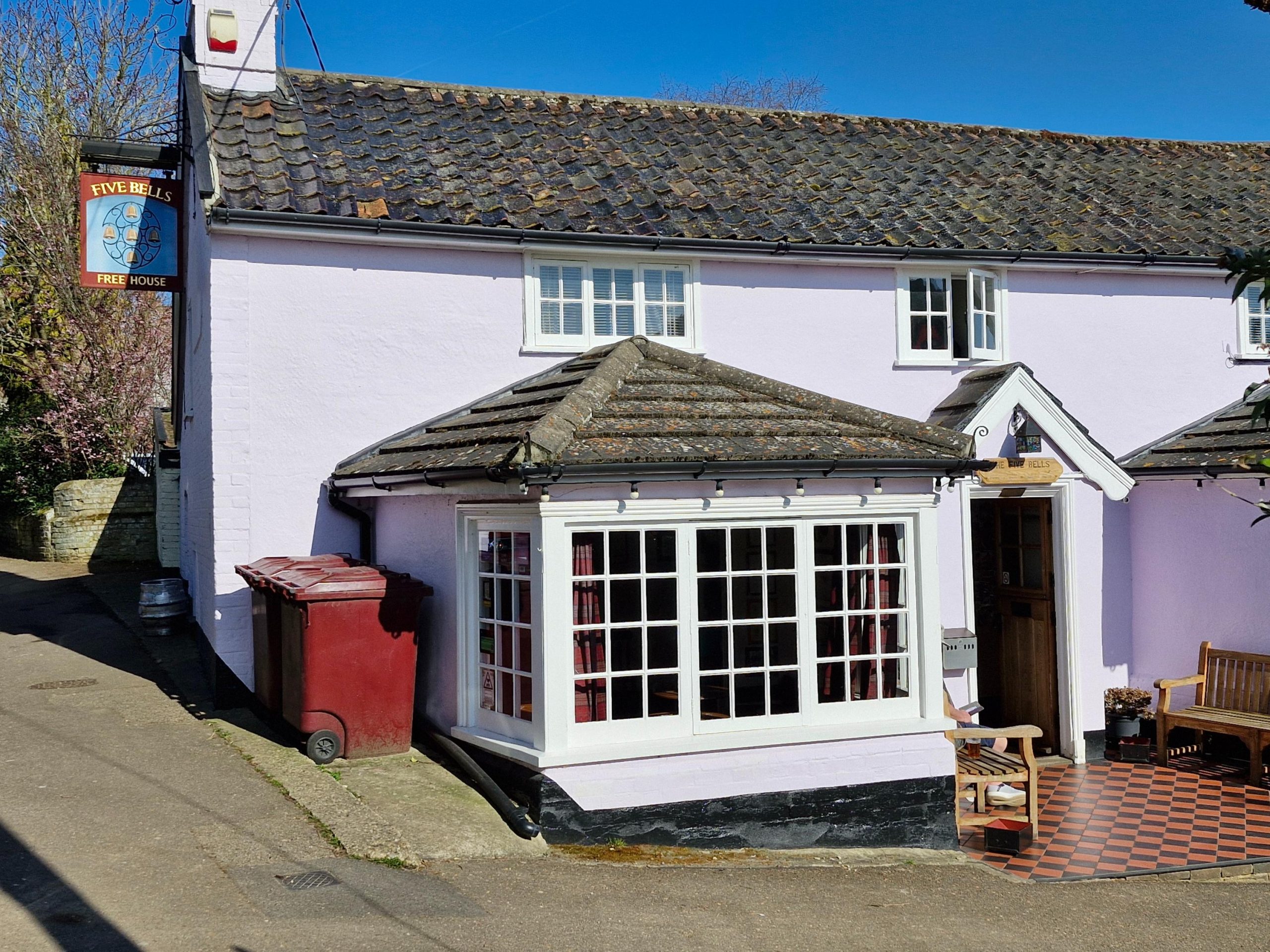
The Five Bells
The Five Bells is a long-established and popular village pub and remains to this day a good old Suffolk drinking house. Dating from the early 19th Century, it followed the tradition of being named after the number of bells at the local church. St Nicholas had an extra bell donated in 1905 by the Kimball family, but the pub name did not change.
Further along on your right, you can view…
The Old Workhouse (Goldmartins) (High Street)
It is not known precisely when this building began to be used as a Parish workhouse, but there are records dating from late 18th century. The Old Workhouse was sold by auction following the Local Government Act 1929, abolishing workhouses.
The building then operated as a school until the new one was built on School Lane. The girls and boys were separated on the two floors, but a hatch was opened to enable all pupils to join in assembly.
St Nicholas Church
Church Cottage / The Old Shop (Howletts & Sons) is viewable on your left as you walk on.
These premises, and some of the land to the back and side, were for many years the site for Howletts shop, which included general stores, butchers and a slaughterhouse. They were established in 1884 (a few years at Poy Street) and finally closed in the 1960s.
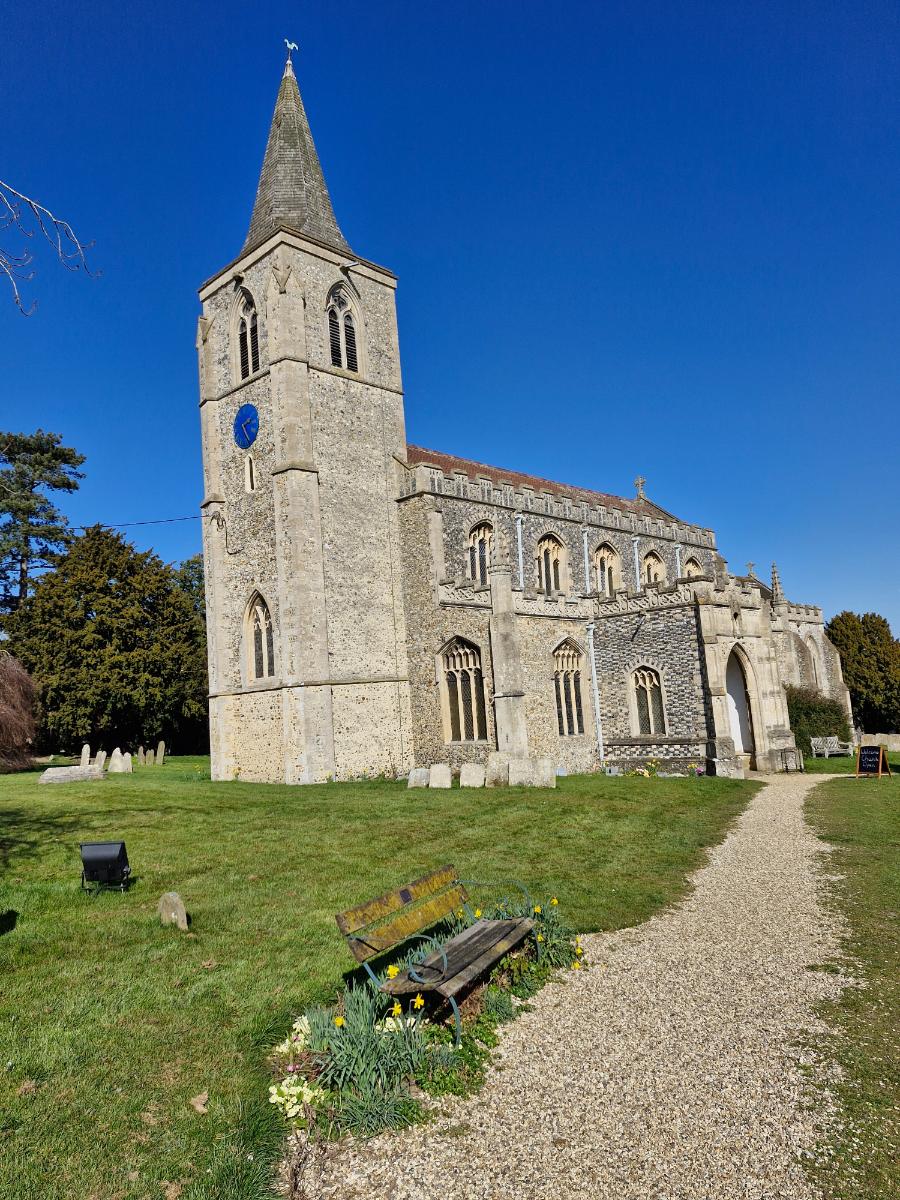
St Nicholas Church
There is no trace of the early Norman church building mentioned in the Domesday Book. Today’s church does, however dates to the 13th century. The earliest feature of the church is the 13th century doorway, while the aisles and striking west tower date to the 14th century. There is an impressive font of that age still in the Church.
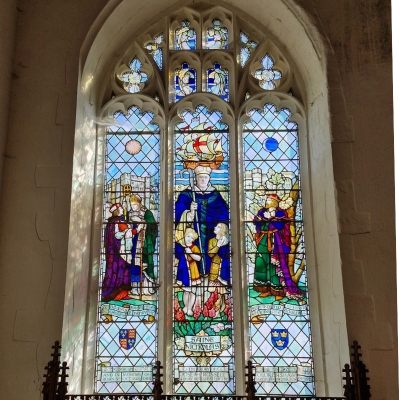
St Nicholas has a fine interior. In particular the two further stained-glass windows were added in the 1930’s, with an Adoration of the Angels at the east end of the south aisle, and up in the chancel a most curious memorial to a rector of Rattlesden, Joseph Russell Olerenshaw. It depicts him photographically as St Nicholas. On the left panel, Thomas Rattlesden greets Henry VII outside the gates of Bury Abbey, whilst on the right St Edmund of East Anglia is martyred.
Marking the importance of the American service personnel stationed at Rattlesden during WWII, there is a dedicated chapel in the church. Visitors should note the iron ring on the south door is famously said to be made from an anchor found on the meadow by the river

Uncover Hidden Treasures
Directions: Returning to the High Street and walking further down you can view the former Rattlesden Hall on your left
Rattlesden Hall
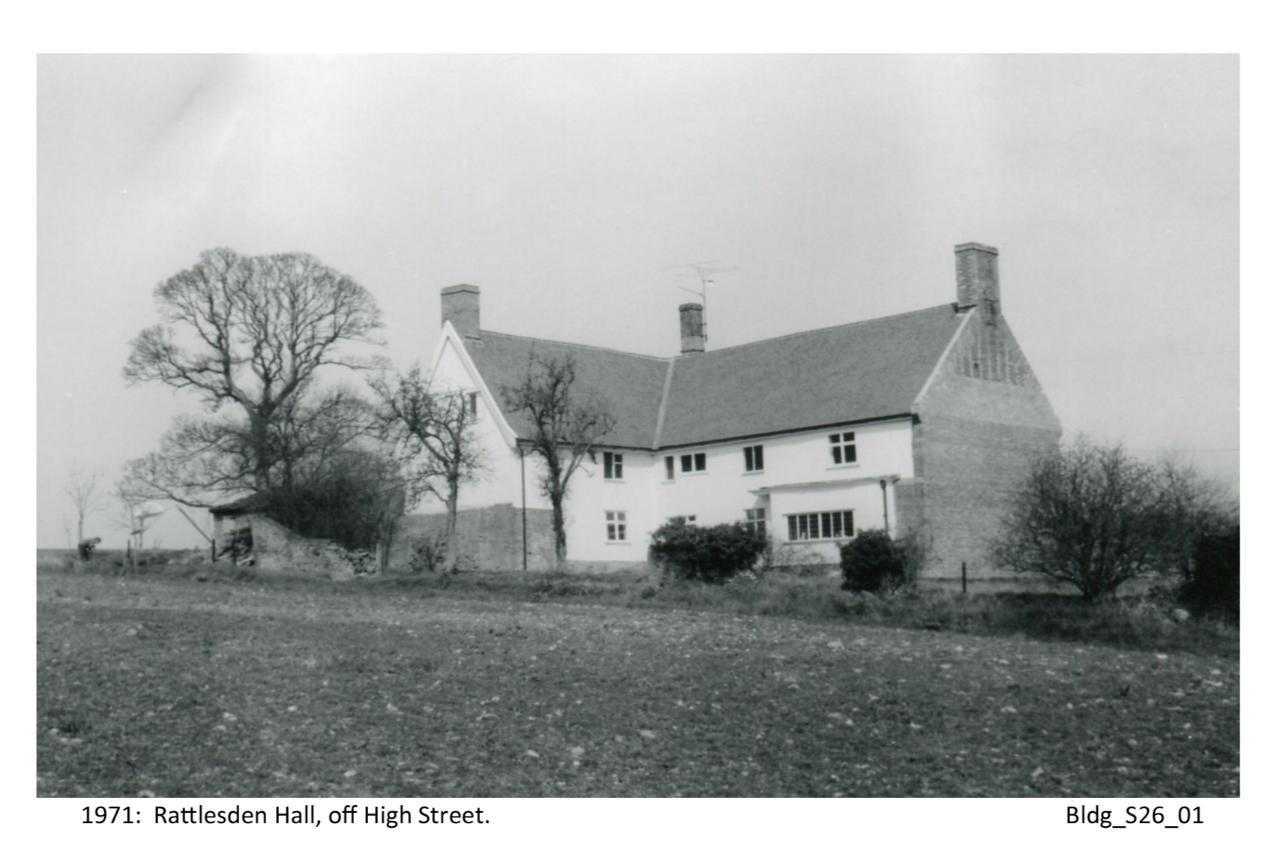
Rattlesden Hall (now Hall Farmhouse) is one of largest farms historically.
Probably the site of Rattlesden Manor and bequeathed to the Abbey of St Ethelreda, Ely in the 13th century. The abbots of Ely held the land until the 16th century, when it was taken over by Queen Elizabeth 1, who subsequently sold it to the Revett family and it has passed through various owners since.
The Hall dates from the 17th Century and together with the surrounding land was leased or owned as a working farm until the late 20th century.
Glebelands (the Old Rectory, High Street) is visible on your right.
The current building was built in 1892 to replace the original rectory which was then about 300-400 years old. It had been empty for some years and stories of ghosts were rife. In fact, the remains of a skeleton and fragments of coffin were discovered under the pantry floor. It is believed to be of Robert Bumpstead, died 1780 in debt, and buried here to prevent his body being seized by creditors. It is now a private residence.
Rattlesden Cemetery
The cemetery began to be used as a parish burial ground in 1905. It includes the WW1 memorial near the entrance and at the north end of the site is a new WW1 commemoration with 27 planted oaks marking the ‘fallen’ servicemen of Rattlesden village.
Cemetery Green and the Village Sign
The large oak in the centre of the triangular green was planted in 1937 to commemorate the silver jubilee of King George V.
The Rattlesden Village Sign details the features and heritage of the village- river, church, anchor and whalebones. Beneath the head of the sign sits a plate featuring the 12th-century St John the Evangelist figurine, found in one of the local village fields.
The village sign was made by local craftsman Edward Hitchcock and was designed by Linda Wood.
Rattlesden Playing Field (Haughley Meadow, Orwell Meadow)
The springs are thought to have been the source of the River Orwell.
Rattlesden Football and Cricket Clubs have used the field over the years, with the football club particularly successful in the 1950s and 60s.
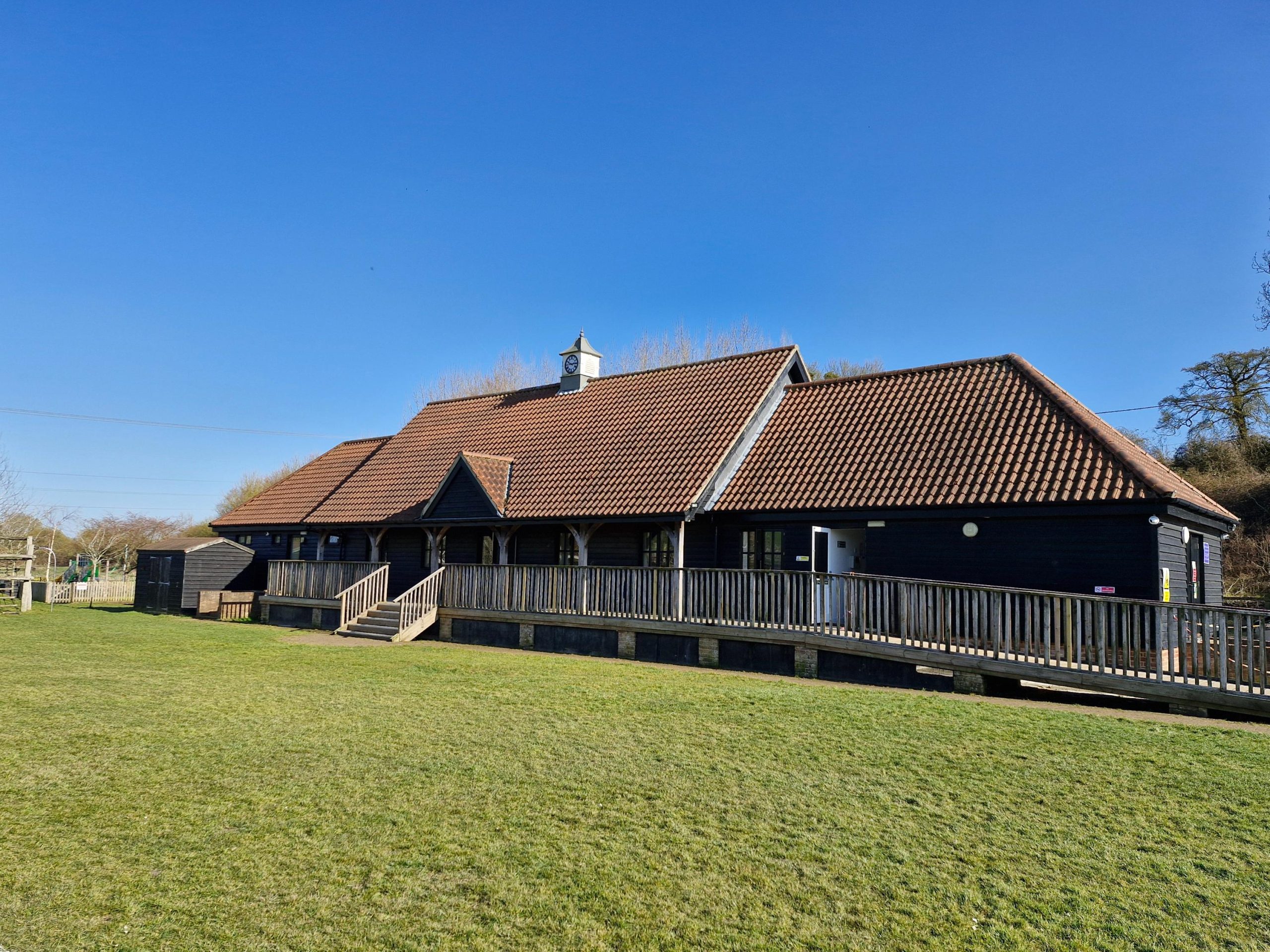
On the site is Rattlesden Pavilion, a sports and recreation venue rebuilt in 2010. replacing a former A14 workers’ hut converted for use by local volunteers (the Community Council).

Birds Green, Suffolk House & Moot House
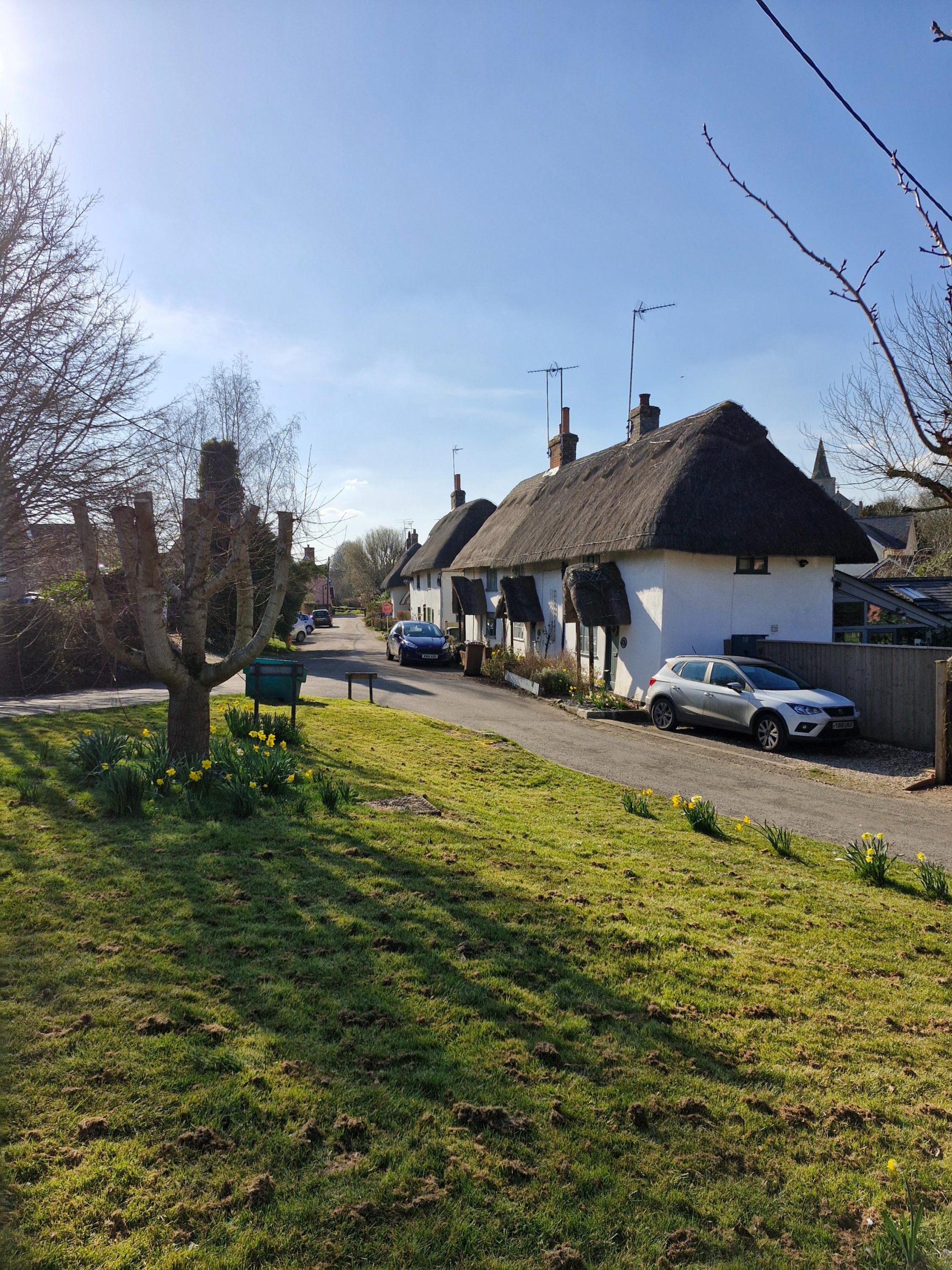
Birds Green
Features a long and picturesque run of thatched cottage houses.
Opposite these cottages, on the land now occupied by bungalows, was a tenter yard (identified from a 16th Century map), an area used to dry woollen cloth by stretching it out to keep its size and shape.
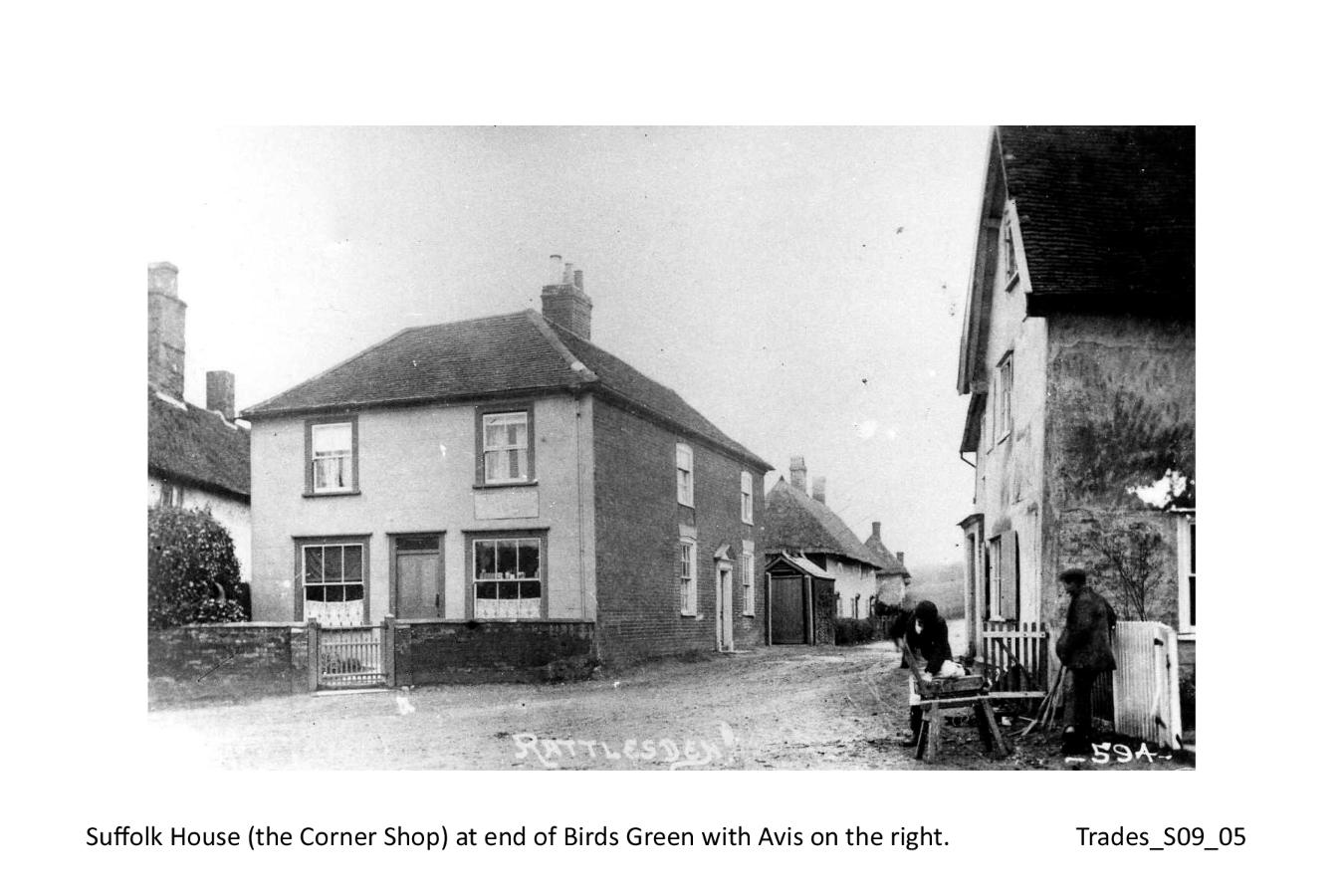
Suffolk House (The Corner Shop)
Suffolk House was known as the Corner shop and was another police station.
At the junction of Lower Road look to your right and you will see Moot House close to Church Lane.
Moot House
In the village of Rattlesden stands this fine old building which dates from about 1430. But long before that the Saxons met in the open air to debate important decisions relating to their communities at what they termed ‘moot hills.
Later there were buildings constructed on these sites and they became known as “moot halls” but their purpose was much the same. However, the landscape historian must beware of jumping to conclusions here because sometimes the halls were built at different locations to the original hills.
Whether the Rattlesden Moot House is one such is a ‘moot point’! (moot point coming from the same root and meaning something which is debatable). Its position right next to the parish church suggests that the site is of ancient significance. It also served in the past as a Guild Hall, a building that fulfilled a similar role as a central organisational hub for the settlement. By the way, notice the fancy bargeboards on the gable end

Uncover Hidden Treasures
Direction: However, from Birds Green you are walking to your left on to Lower Road and on your left is the Brewers to complete your trail.
Upcoming Village Events

Rattlesden History Group AGM at Rattlesden Pavilion
Rattlesden History Group AGM – followed by a ‘virtual walk along the High Street’ presentation and display.
November 26, 2025 at 19:00
FREE

Looking Back at Rattlesden Past afternoon teas.
2026 Looking Back at Rattlesden Past afternoon teas.
These events take place regularly throughout the year, sharing the excellent collection of archives and images with members of the community. These events use the village’s heritage to bring the community together for an enjoyable social event.
Dates TBC, 2026
FREE
What Our Visitors Say
“Walking through Rattlesden is like stepping back in time. The village’s charm and history are truly captivating.”

Emily Thompson
Local Historian
“The guided walk was an eye-opener. I learned so much about the village’s past and its beautiful landmarks.”

John Carter
Visitor from London
“Rattlesden’s walking routes offer a perfect blend of nature and history. It’s a hidden gem in Suffolk!”

Sarah Collins
Nature Enthusiast
“I love the community events here. They bring everyone together and highlight the beauty of our village.”

Michael Green
Rattlesden Resident